


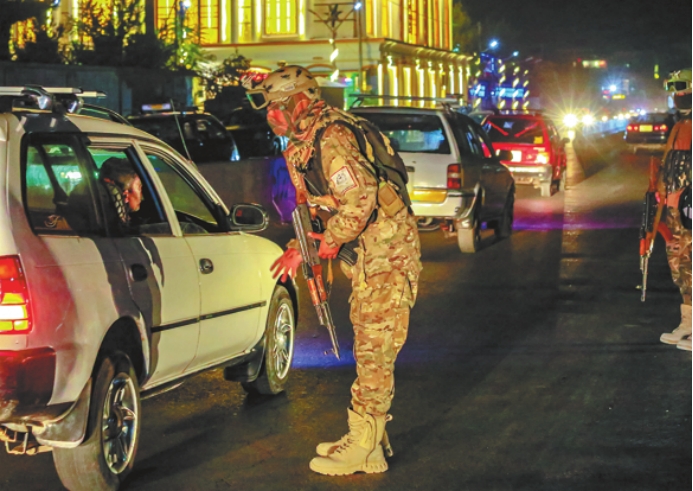
In a sharp escalation of long-standing border tensions, Pakistan and Afghanistan traded intense military strikes over the past 24 hours, prompting Pakistan's Defense Minister Khawaja Mohammad Asif to declare the two nations now locked in an "open war."
The latest cycle of violence began late Thursday when Afghan forces launched attacks on Pakistani border positions, which Kabul described as retaliation for Pakistani airstrikes conducted earlier in the week on suspected militant hideouts along the frontier. In response, Pakistani aircraft and ground units struck targets inside Afghanistan early Friday, hitting military sites in Kabul—the Afghan capital—as well as provinces including Khost, Paktika, and others.
Speaking out on social media platform X, Defense Minister Asif stated bluntly: "Our patience has now run out. Now it is open war between us and you (Afghanistan)." He expressed deep frustration, noting that Pakistan had anticipated greater regional stability following the 2021 NATO withdrawal and the Taliban's return to power. Instead, he accused the Taliban-led government of sheltering militant groups—particularly the Tehrik-i-Taliban Pakistan (TTP)—and allowing Afghanistan to become a base for "exporting terrorism" into Pakistan. Asif also criticized Kabul for allegedly aligning too closely with India, Pakistan's longtime rival, amid improving Afghan-Indian economic ties.
Pakistan's military reported conducting successful operations against more than 20 Afghan targets, claiming to have eliminated at least 274 Taliban fighters and affiliates while wounding over 400. Pakistani losses were reported as 12 soldiers killed, 27 wounded, and one missing. Officials emphasized that the strikes were precision operations aimed solely at military infrastructure.
Afghan Taliban spokespeople, including Zabihullah Mujahid, strongly disputed Pakistan's casualty figures, labeling them exaggerated or fabricated. They reported inflicting heavier losses on Pakistani forces—claiming 55 soldiers killed (with 23 bodies allegedly recovered), numerous captures, and 13 Afghan troops killed alongside 22 wounded and 13 civilians injured. Later updates from Kabul alleged that Pakistani strikes deliberately hit civilian areas, including homes in Khost and Paktika provinces, killing 19 civilians—many women and children—and injuring 26 others. One reported incident involved the bombing of a religious school in Paktika.
Independent verification of the conflicting claims remains impossible due to restricted access to the affected border regions.
The flare-up follows months of simmering hostilities, including deadly clashes in October that killed dozens on both sides and prompted a short-lived, Qatar-mediated ceasefire. Subsequent talks in Turkey failed to yield a durable resolution, and sporadic exchanges of fire have persisted.
Qatar has again stepped in as a mediator, with its State Minister for Foreign Affairs holding urgent calls Friday with counterparts from both Islamabad and Kabul to push for de-escalation. Turkey, Saudi Arabia, and Iran have also voiced support for dialogue, with Iranian Foreign Minister Abbas Araghchi urging restraint during Ramadan. UN Secretary-General António Guterres called on both parties to prioritize diplomacy and civilian protection, while Russia offered to facilitate talks if requested.
As fighting continues along the porous Durand Line, both sides appear entrenched in their positions—Pakistan vowing to defend its sovereignty decisively, and the Taliban expressing willingness for negotiations while condemning the strikes as aggression. The situation remains highly volatile, raising concerns about a broader and prolonged regional crisis between the two nuclear-armed neighbors and their Taliban-led counterpart.
